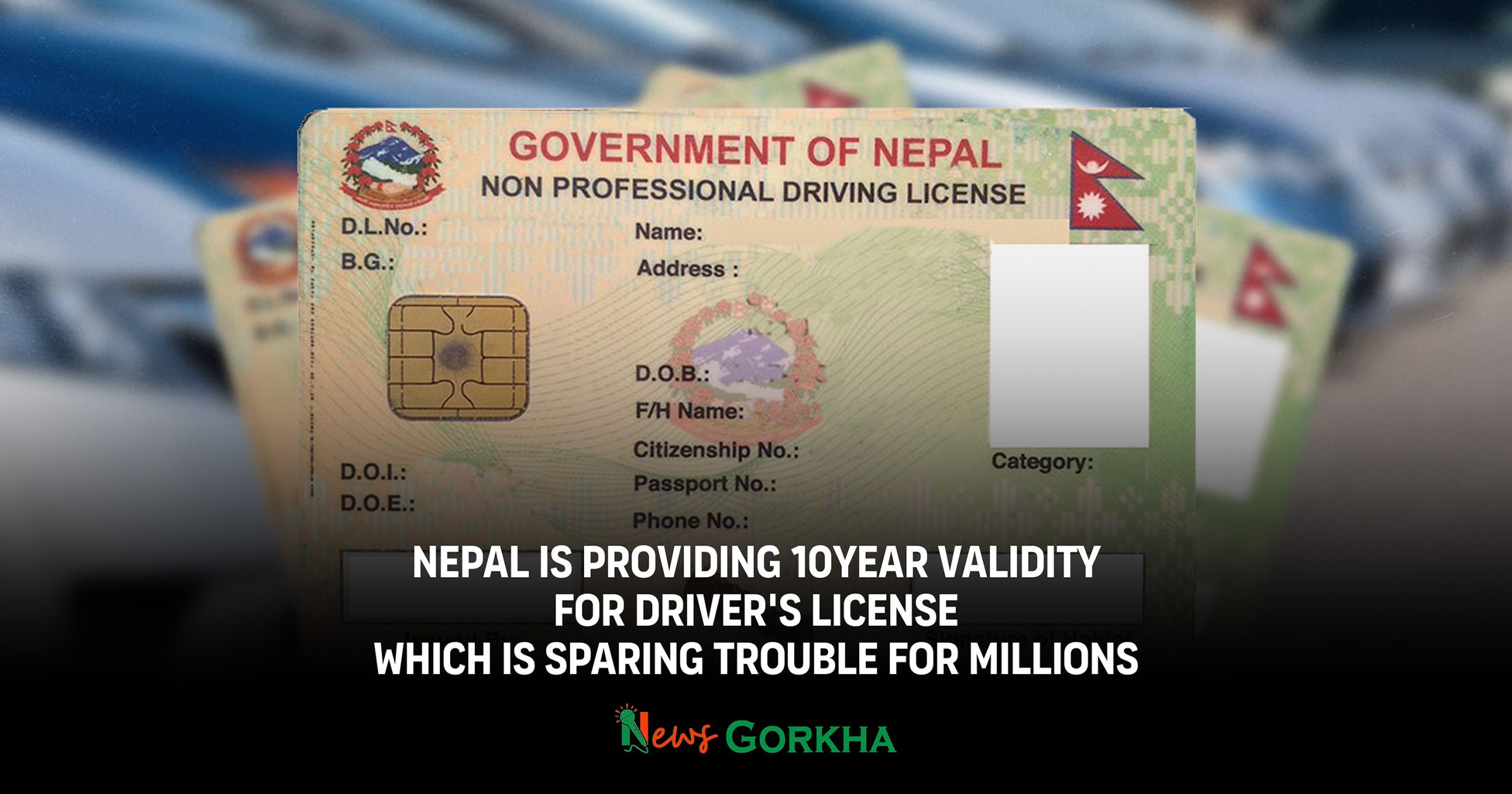
Nepal is providing 10-year validity for driver's license, which is sparing trouble for millions
Kathmandu, August 1 – For the first time in itshistory, the Government of Nepal has officially extended the validity period of driving licenses from 5 years to 10 years as a step to ease public service and ease the work burden of drivers. The amendment follows an amendment to the Transport Management Act, 2049, made public in the recent edition of the Nepal Gazette (Rajpatra).
This much-anticipated transformation has the objective of streamlining administrative clutter and increasing convenience for drivers who had to renew their license every five years.
A Step Towards Modernizing the Transport System
The amendment replaces the earlier 5-year validity of driver’s licenses as proposed in the Act. New and renewed ones are for 10 years. The amendment was brought in by the “Bill to Amend Certain Nepal Acts,” now gazetted.
According to the gazette, Sub-section (3) of Section 54 of the Transport Management Act is presently “up to ten years” and not the earlier “up to five years.” Similarly, Section 56 concerning the renewal period on validity has been modified in consonance to reflect the new 10-year term.
Public Reaction and Benefits
The change has largely been embraced by the public. Most drivers have been pleased to no longer need to subject themselves to the inconvenience of renewing their license every few years — a process otherwise characterized by long lines, delays, and red-tapism at transport offices.
“I’ve spent nearly a day just to get my license renewed before that,” added 34-year-old taxi driver Ramesh Adhikari, operating from Pokhara. “If I don’t have to do it again for the next 10 years now, that’s a great gift for us like me who never settle anywhere for long.”
The government officials see it as reducing pedestrians in transport offices across the country, thereby allowing the workers to focus more on other services. It will also reduce load processing on online platforms, which lag due to excessive user activity.
This is all within the broader plan of the government to computerize public services and improve the public experience. With less renewals, the authorities intend to cut mistakes, lower corruption, and maximize the use of technological resources in the long run.
DoTM officials asserted that they are amending their systems in line with this and would soon begin issuing new licences under the 10-year rule. They would also give the benefit of the longer time period to those whose licences were to be renewed.
Warning and Duties Still Remain
Although the validity duration is longer now, the authorities assure the public that the responsibility of teen safe driving and medical examinations does not shift. “Just because the license is valid for longer duration doesn’t mean the drivers can turn a blind eye towards health, safety, and sensible road behavior,” DoTM spokesperson stated.
Other nations’ long-term validity of a license relies also on periodic eye checks or age groups. Nepal can do that too in the future, but now the amendment is considered relief for drivers.
With this new 10-year validity, Nepal is taking cue from a number of countries that have extended license terms as a move to minimize bureaucracy and maximize service delivery. It is a small but significant step in the direction of better governance and sophisticated public service machinery.
For Nepali drivers, it’s a blessing — one that saves time, to boot, and suggests a government trying to ease things up a bit for its people.